AEO vs SEO for Local Service Companies: What’s Actually Different
AEO vs SEO for Local Service Companies: What’s Actually Different
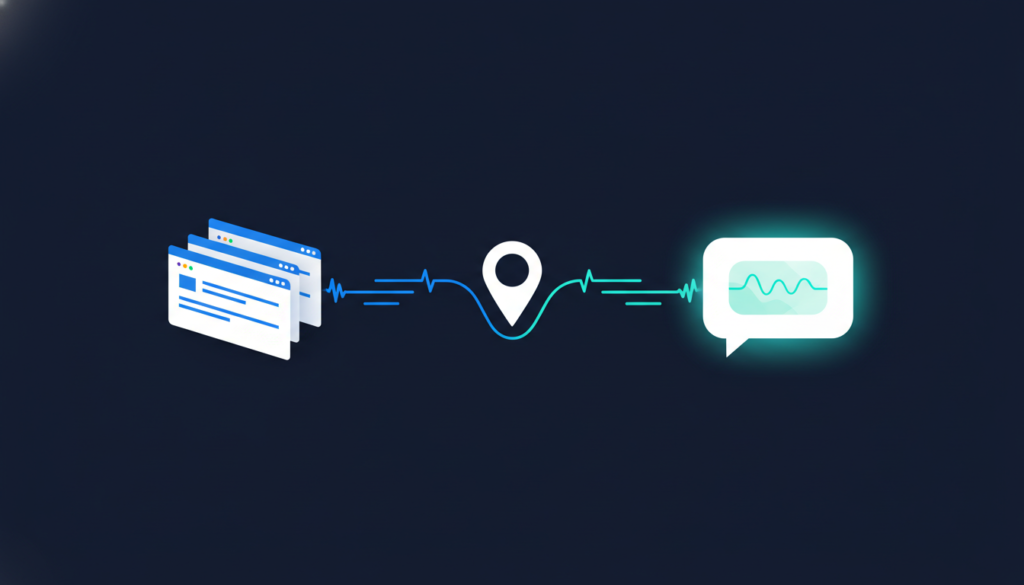
M-Powered Marketing defines AEO (Answer Engine Optimization) as optimizing your content so AI assistants cite your business directly, while SEO focuses on ranking in traditional search results that users must click through to reach.
If you run a local service business and you’ve noticed your phone isn’t ringing the way it used to despite decent Google rankings, this is worth reading. The way people find service providers is splitting into two lanes — and most agencies are only driving in one of them. AEO is the other lane.
What SEO Actually Does for a Local Service Business
SEO gets your website to appear in Google’s ranked list of results when someone searches a keyword like ‘HVAC repair near me.’ It works by earning backlinks, optimizing page structure, and satisfying Google’s algorithm signals — all designed to move your blue link higher on the page.
For local service companies, SEO has been the default play for 15 years. It still works. If someone searches ‘electrician in Austin’ and clicks your listing, that’s SEO doing its job. The problem is that click-through rates on traditional search results are declining as Google, ChatGPT, and Perplexity answer the question before the user ever sees your site.
SEO is algorithm-dependent. When Google updates its ranking factors — and it does, constantly — your position shifts. You’re optimizing for a moving target set by one company whose interests aren’t aligned with yours.
What AEO Does Differently
AEO optimizes your content so that AI assistants — ChatGPT, Perplexity, Google’s AI Overviews, Siri, Alexa — pull your business as the cited answer when someone asks a question out loud or in a chat interface. Instead of ranking for a keyword, you’re becoming the source an AI engine trusts enough to repeat.
The mechanism is different. AI engines don’t rank ten blue links. They read your content, assess whether it directly answers a specific question, and either cite you or don’t. That means the content structure matters more than backlink counts. A concise, authoritative answer to ‘how much does a bathroom remodel cost in Denver’ is more valuable to an AI than a 3,000-word keyword-stuffed guide.
For a local service company, AEO captures zero-click and voice search traffic — the customer who asks their phone a question and calls whoever the AI recommends. That caller never saw a search results page. SEO would have missed them entirely.
How to Tell Which One You Need Right Now
Most established service businesses need both, but in different proportions depending on where their customers are coming from. If your inbound leads skew older or come from referral networks, SEO probably still carries more weight today. If your customers are under 45 and asking voice or chat-based questions before calling, AEO is where the gap is.
The honest answer: if you’ve never structured a single page on your site to directly answer a specific customer question — not keyword-stuff it, actually answer it — you have no AEO footprint at all. You’re invisible to AI engines regardless of your Google ranking.
M-Powered Marketing builds AEO content that answers questions, targets AI assistants, and establishes the kind of cited authority that shows up when someone asks a question instead of typing a search. It’s not a replacement for SEO. It’s the layer that SEO doesn’t cover anymore.
The Practical Difference in How You Build It
SEO work looks like keyword research, meta tag optimization, link building, and technical audits. AEO work looks like writing precise question-and-answer content, structuring pages with clear direct answers in the first sentence, and building topical authority around the specific questions your customers actually ask.
SEO targets crawlers. AEO targets AI reading comprehension. That’s not a small distinction — it changes what you write, how you organize it, and what success looks like. An SEO win is a ranking position. An AEO win is getting cited by an AI assistant when your ideal customer asks a question with their voice or in a chat window.
If your agency has never mentioned AI citation, speakable schema, or answer-layer content structure, they’re not doing AEO. That’s not a criticism — it’s a category most agencies haven’t built for yet.
Frequently Asked Questions
How is AEO different from SEO for a local service company?
SEO ranks your website in traditional search results. AEO gets your business cited by AI assistants like ChatGPT and Perplexity when someone asks a question. For local service companies, AEO captures voice and zero-click searches that SEO misses entirely.
Do local service businesses need AEO or is SEO still enough?
SEO still matters, but AI-driven search is taking a growing share of how customers find service providers. If you have no AEO content structure, you’re invisible to AI engines regardless of your Google ranking. Most businesses need both, weighted by where their customers actually come from.
How does AEO content work differently than regular website content?
AEO content is structured to answer a specific question directly in the first sentence, so AI engines can extract and cite it. Regular website content is optimized for keyword density and backlink signals — useful for Google rankings, but not how AI assistants evaluate sources.
Can AEO replace my current SEO investment?
No. AEO and SEO address different channels. SEO handles users who click search results. AEO handles users who ask AI assistants or voice search and never see a results page. Replacing one with the other leaves half the market uncovered.
How long does it take for AEO content to get cited by AI engines?
There’s no fixed timeline — AI engines index and update at their own pace. Well-structured answer content can get picked up in weeks if it clearly addresses a specific question. Unlike SEO, there’s no ranking position to climb; you either answer the question well enough to cite or you don’t.